Why is energy storage necessary?
When the wind doesn't blow ...
Battery storage provides support when it matters most.
When the wind dies down, the number of turbines is irrelevant: minimum generation remains consistently low, regardless of ambitious expansion targets.
and no sun shines.
Is there still green, saved electricity from Germany?
If the sun isn’t shining, even huge solar parks won’t help. At night, the lights stay off.
Our battery storage systems help bridge the dark doldrums.
Technology
Fluctuating renewable energies are volatility drivers in the electricity market
In our project development, FBS relies on large-scale battery storage to create the necessary flexibility for the power grid of the future.
Using the example of April 13, 2024
The consequences of a lack of flexibility in the power grid
The expansion of renewable energies… is in full swing.
The shutdown of fossil power plants… is in full swing.
Electrification… is in full swing.
The expansion of flexibility in the power grid… is being neglected.
Rising costs for all electricity customers in Germany €3.09 billion in 2023
Curtailing renewable energies and ramping up fossil power plants is inefficient and causes avoidable costs amounting to billions.
Decreasing Efficiency
Discrepancy between supply and demand leads to the loss of renewable energy.
Rising Costs
Redispatch calls have cost German electricity customers €7.29 billion over the past two years.
Increasing Energy Demand
From 567 TWh (2023) to 741 TWh in 2035.
Increasing Foreign Dependence
To compensate for fluctuations caused by renewable energies, fossil fuels or electricity must be imported.
Unnecessarily High CO₂ Emissions
Through the use of gas-fired power plants to compensate for energy fluctuations.
Battery storage systems are the flexibility providers of the energy transition
Battery Storage Explained
Systems designed by us...
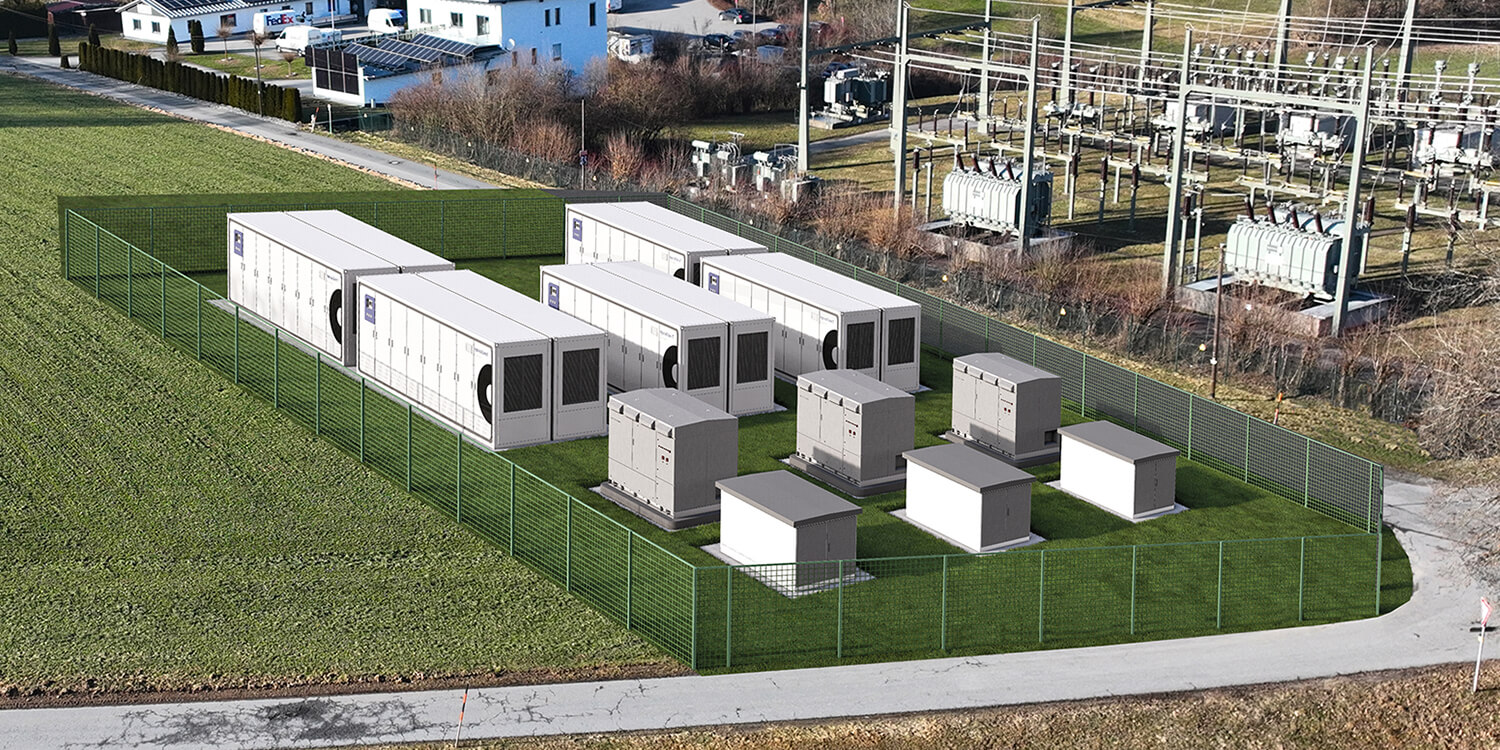
…are essentially giant batteries. They charge energy to release it later when needed.
…with a storage capacity of 10 MWh can store as much energy as is needed to cook 331,565 average-sized Linda potatoes in a pressure cooker.
…simultaneously fulfill two functions:
As consumers, they absorb surplus energy from the grid and store it.
As producers, they feed the previously stored energy back into the grid when required.
…can “store” energy and thus shift it from one time slot to the next.
Battery Storage Explained
Systems designed by us...
…are essentially giant batteries. They charge energy to release it later when needed.
…with a storage capacity of 10 MWh can store as much energy as is needed to cook 331,565 average-sized Linda potatoes in a pressure cooker.
…simultaneously fulfill two functions:
As consumers, they absorb surplus energy from the grid and store it.
As producers, they feed the previously stored energy back into the grid when required.
…can “store” energy and thus shift it from one time slot to the next.
Comparison of Renewable Generation vs. Flexibility Provision
Electricity storage has moved into the focus of discussions about the electricity market and the energy transition in recent years. In addition to wind and solar plants, which are responsible for generating renewable electricity, facilities must be developed to compensate for fluctuations in renewable energy generation.
Energy feed-in into the grid | ||
Trade tax payer at the operating location | ||
Targeted feed-in during peak load times | ||
Grid relief during overproduction | ||
Low land consumption 2,000 m² | ||
Short planning phases of 2 years until commissioning |
Area comparison: renewable generation vs. flexibility
We measure the performance class of our storage systems in wind power and solar equivalents. However, they cannot only generate but also store – thus having a double effect, with significantly smaller land consumption and less impact on the landscape.
Wind power (4.6 MW)
Solar PV (4.5 MW)
Battery storage (4.5 MW)
“The value of electricity will gain importance, i.e., its availability during times of high demand, the controllability of the plants, and the ability to provide system services such as reactive power provision or frequency and voltage stabilization.”
Study: Levelized Cost of Electricity for Renewable Energies (March 2018)
Fraunhofer Institute for Solar Energy Systems ISE
Cell Chemistry
FBS-Systems storage facilities exclusively operate with LFP technology battery containers from renowned manufacturers. These have been explicitly developed for use as stationary battery storage and are thus optimally designed for operation on the power grid. Manufacturers provide several years of warranty, and mandatory battery take-back at the end of life.
Lithium iron phosphate (LFP) is one of the leading cell chemistries for stationary energy storage, with LFP referring to the anode material of the battery cell and standing for lithium iron phosphate (LiFePO₄).
This technology offers the advantage that conflict minerals such as cobalt, cadmium, manganese, and nickel are entirely avoided. Furthermore, LFP cells require less lithium than common NMC batteries (nickel-manganese-cobalt), have a longer lifespan than comparable electricity storage systems, and there are currently significant efforts and successes in establishing a circular economy for these battery types.
Due to their robust chemical structure, LFP batteries are less susceptible to overheating and thermal runaway, making them a safe option for stationary use.
Conflict Minerals
A significant advantage of LFP technology is the avoidance of conflict minerals such as cobalt, cadmium, and nickel. These materials are often associated with social and environmental problems in mining and procurement. LFP batteries instead use lithium and iron-containing raw materials, which are less problematic.
In addition, great efforts are being made to improve the sustainability of lithium extraction and strengthen the circular economy. These measures can significantly reduce the ecological and social impacts of battery cell production.
Recycling
In terms of recycling, lithium iron phosphate (LFP) batteries score highly compared to other battery technologies. All used metals can be recycled up to 100%, and the electrode materials and polymer separator can also be reprocessed by over 90%. Research and industry are continuously developing new recycling processes that automatically disassemble old batteries and recover up to 95% of the contained raw materials in reusable quality. These developments promote a sustainable circular economy. In these aspects, lithium iron phosphate is rated as the best available solution in the BMWi study: “From an ecological perspective, LFP, like LMO, is non-toxic and harmless. Moreover, unlike electrode materials containing nickel and cobalt, it is already successfully used as a potentially inexpensive active material.”
Lithium
Lithium was only added to the EU’s list of critical raw materials in 2020, as reserves are concentrated in a few countries. Although battery production represents the most important use of lithium, it is not the only application.
The extraction methods of this raw material, also known as “white gold” due to its color, vary greatly. In Australia, lithium is primarily extracted from mineral rock using a complex chemical process. This process requires temperatures of more than 1,000 °C. In contrast, lithium is extracted from salt lakes, such as the Atacama Salt Lake in Chile, over several months using sun and chemicals from brine. Both methods have different ecological and economic impacts.
Trade Tax
With the entry into force of the Annual Tax Act 2024, 90% of the trade tax revenues from battery storage systems will remain at the operating location and not go to the registered office of the operating company. We would particularly like to emphasize that, in cooperation with a tax law firm specializing in renewable energies, we have already developed a method, even before the approval of this draft, through which a large part of the trade tax of the storage project company can flow directly to your municipality.