
Our Promise
Battery Storage for Utilities, Grid Operators, and Energy Providers
Grid congestion and limited connection capacity increasingly present technical, economic, and regulatory challenges for the energy sector. Battery storage offers a flexible, economical, and future-proof solution to utilize existing grid infrastructure more efficiently and unlock new economic potential.
Our battery storage solutions combine grid-supportive operation, commercial flexibility marketing, and flexible grid connection models according to § 17 para. 2b EnWG, without costly grid expansion.
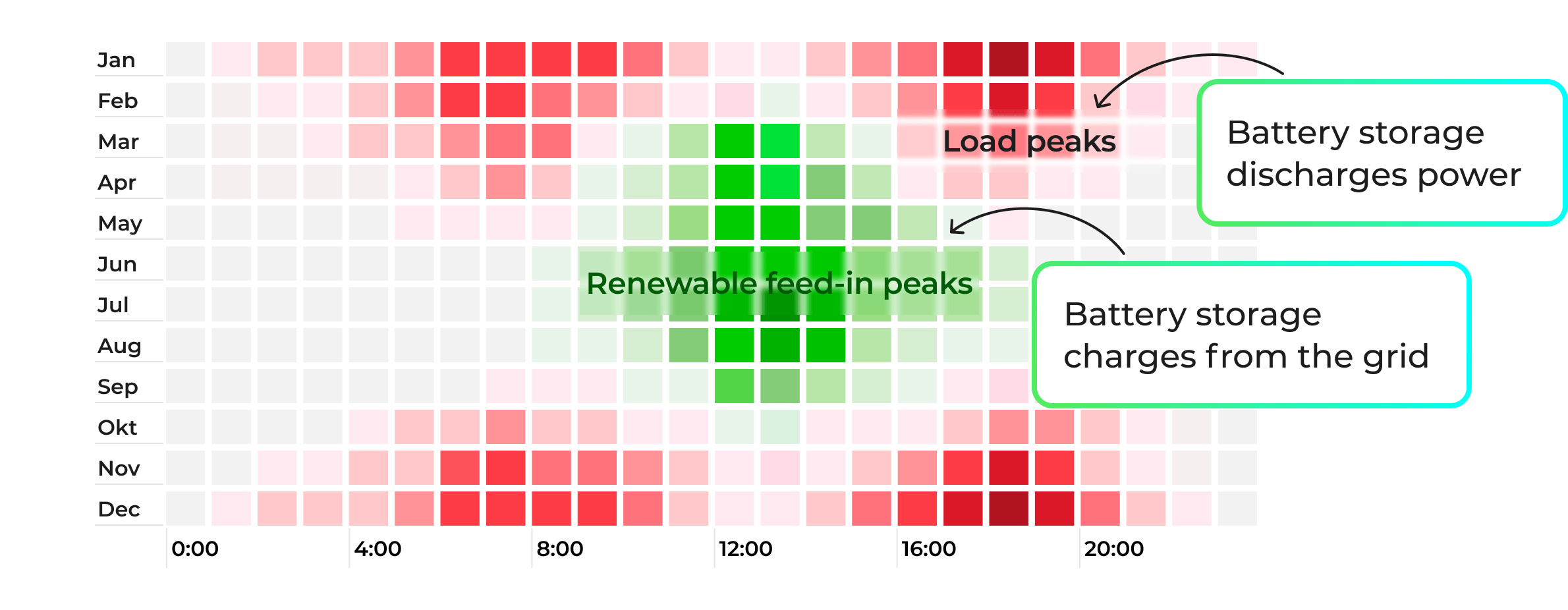
Typical utilization of a distribution grid (HV/MV)
ESTABLISHED PROJECT PARTNER
Reference Projects and Experience
FBS-Systems is the market leader in flexible grid connections according to § 17 para. 2b EnWG
We have already concluded 5 different FCA agreements with grid operators in various grid scenarios (load- or feed-in-dominated).
37 MW of battery storage grid-neutral or grid-supportive through an FCA solution from FBS under construction.
Standardized and proven contract templates for municipal utilities and energy providers.
The reference project Balzhausen was part of the feed-in socket of LEW Verteilnetz (LVN), a practical model for the flexible integration of feed-in systems, as also reported by pv magazine:

Image source: StMWi / F. Wachtveitl
Flexible Grid Connection Models According to § 17 Para. 2b EnWG
A key lever for the integration of battery storage is the flexible grid connection according to § 17 para. 2b EnWG. These connection models enable the operation of storage systems even with limited grid capacity, without costly grid expansion.
Instead of permanent expansion measures, the following are used:
- temporary restrictions
- intelligent operating modes
- flexible operating models
adapted to load- or feed-in-dominated grid situations.
To address these situations, the legislature took action in the spring of 2025. With Section 17(2b) of the Energy Economy Act (EnWG), it has provided project developers and municipal utilities with a powerful tool.
How Battery Storage Works in Grid Operation and Energy Supply
Reducing Grid Congestion Without Grid Expansion
A key advantage of battery storage systems for grid operators and municipal utilities is the ability to use existing grids more efficiently. Through targeted storage and time-shifted feed-in, overloads are prevented before they occur.
Battery storage enables:
- grid-supportive relief at local congestion points
- intermediate storage of solar and wind peaks
- smoothing of load peaks from industry and commerce
- reduction of redispatch measures
- higher supply security at lower grid operating costs
Co-Ownership
, a municipal utility, and FBS-Systems as partners

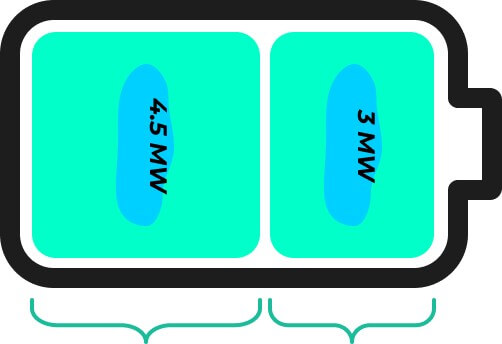
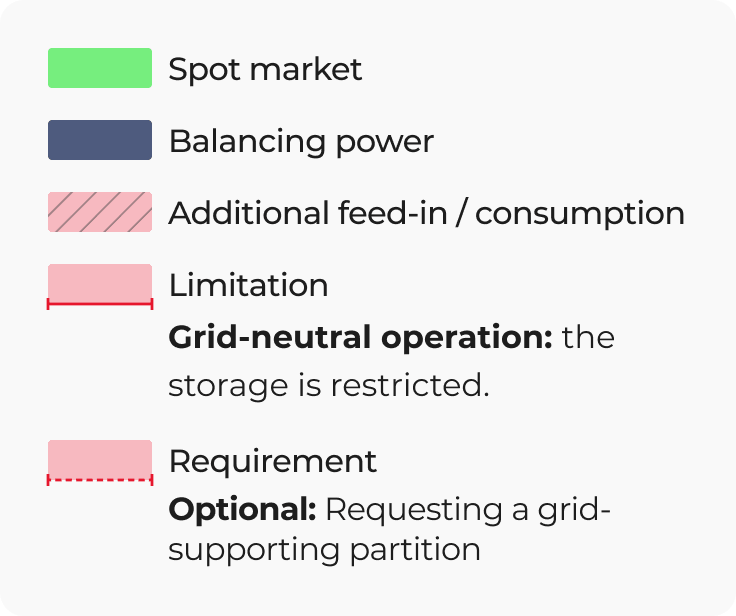
Optional grid-supportive partition for local congestion (consumption and feed-in) or intermediate storage of own solar generators.
Grid-neutral and commercially marketed partition with attractive returns.
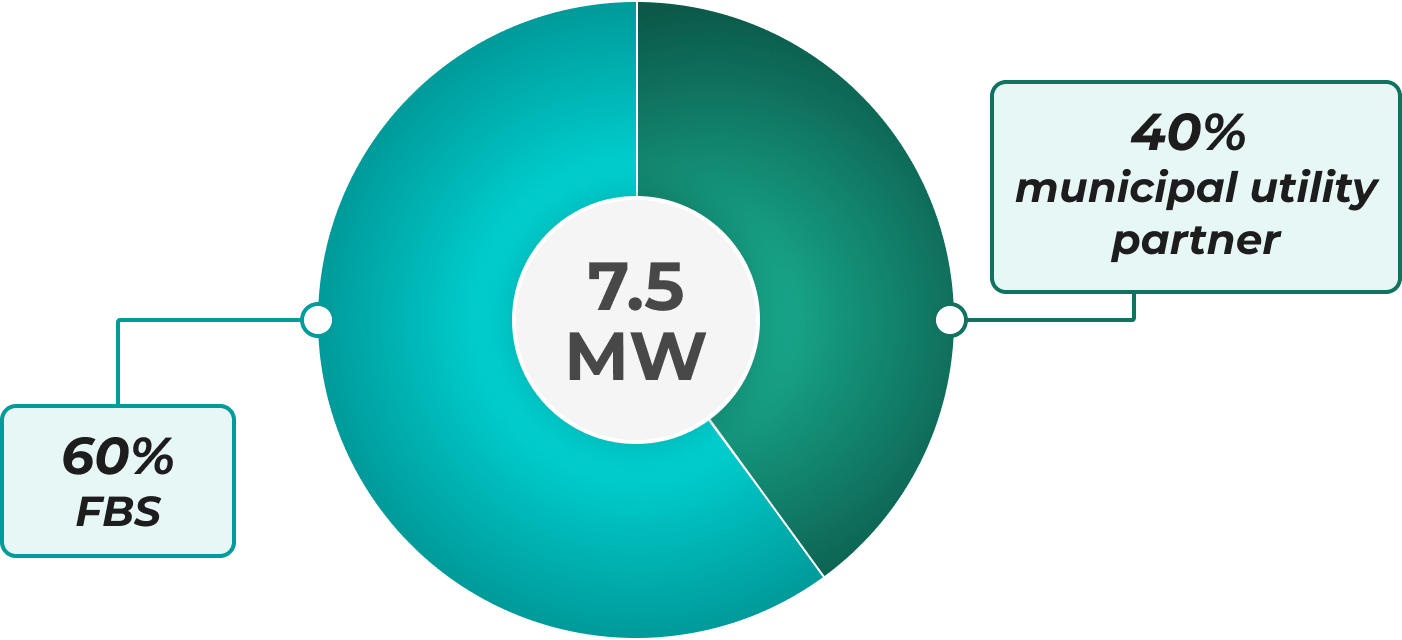
Keep value creation local. Of course, FBS also offers partnership models for municipal utilities, grid operators, and energy suppliers. We are happy to take on an active leadership role as the majority owner to keep processes streamlined.
Example of a 7.5 MW storage system:
Can also be connected to different cable systems in the grid area.
This way, the battery storage combines grid stabilization and attractive revenue optimization in one system.

Possible ownership structures 7.5 MW storage system
With 4.5 MW grid-neutral and 3 MW grid-supportive
Attractive Returns Through Partnership
The energy provider rents an optional grid-neutral partition as a co-shareholder of the battery storage special purpose entity. Alternatively, to cover consumption peaks of local industry.
The energy provider participates in attractive returns from flexibility marketing of the grid-neutral partition.

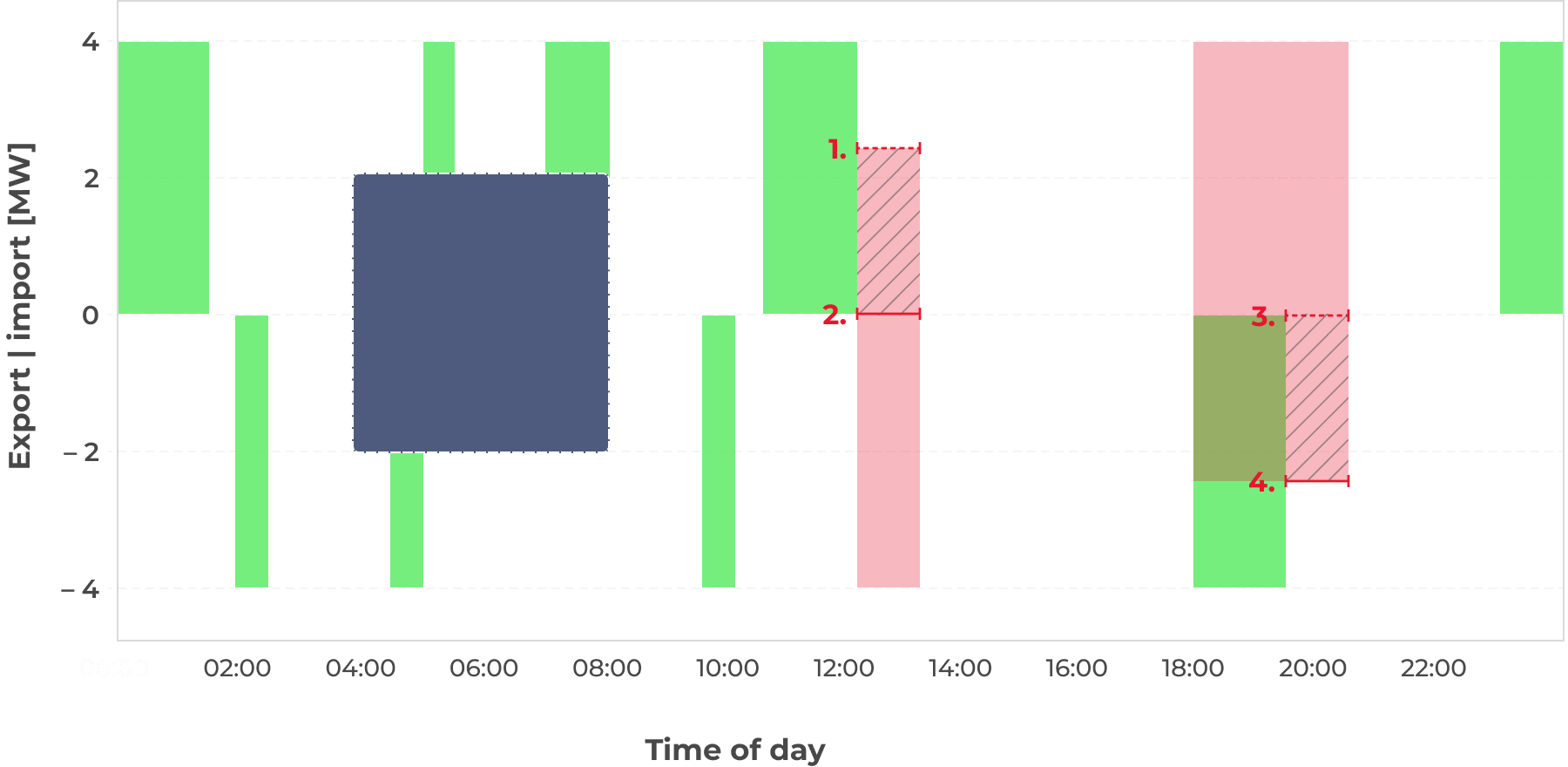
Illustrative representation -
Impact on battery storage operation
Eligible Financing as an Additional Component
For suitable battery storage projects, KfW Program 270 “Renewable Energies – Standard” can be an attractive financing option. Currently Loans of up to 150 million euros per project and, in general, up to 100% of eligible investment costs possible. Specific eligibility, Financing terms and collateral must be reviewed with the financing partner on a project-by-project basis.
From an Attractive Business Case to a Financable Project
Battery storage systems are Market Assets: Their profitability depends, among other things, on revenue trends, marketing strategy, and regulatory Framework conditions. Therefore, securing a grid connection early on and professional multi-market optimization are crucial for a robust project. as well as an appropriate risk structure. Depending on the risk profile, for example, floor or Tolling-Models that secure a portion of merchant revenue and improve predictability increase.
Structured Project Development from a Single Source
A successful battery storage project begins long before the battery is ordered. The strategy and business case are followed by site and grid connection assessments, permitting, financing and contract structuring, as well as EPC award and construction. After commissioning and prequalification, the ongoing marketing and optimization of the asset. FBS supports this process from the initial site assessment through to the operational storage project.
Outlook: Reducing distribution grid charges and smoothing grid load peaks with battery storage.
In addition to reducing the technical load on the grid, battery storage systems offer significant economic benefits for energy suppliers and municipal utilities. By reducing peak loads and peak demand, grid fees charged by the upstream grid operator are noticeably reduced, and available grid connection capacity at the local level increases.
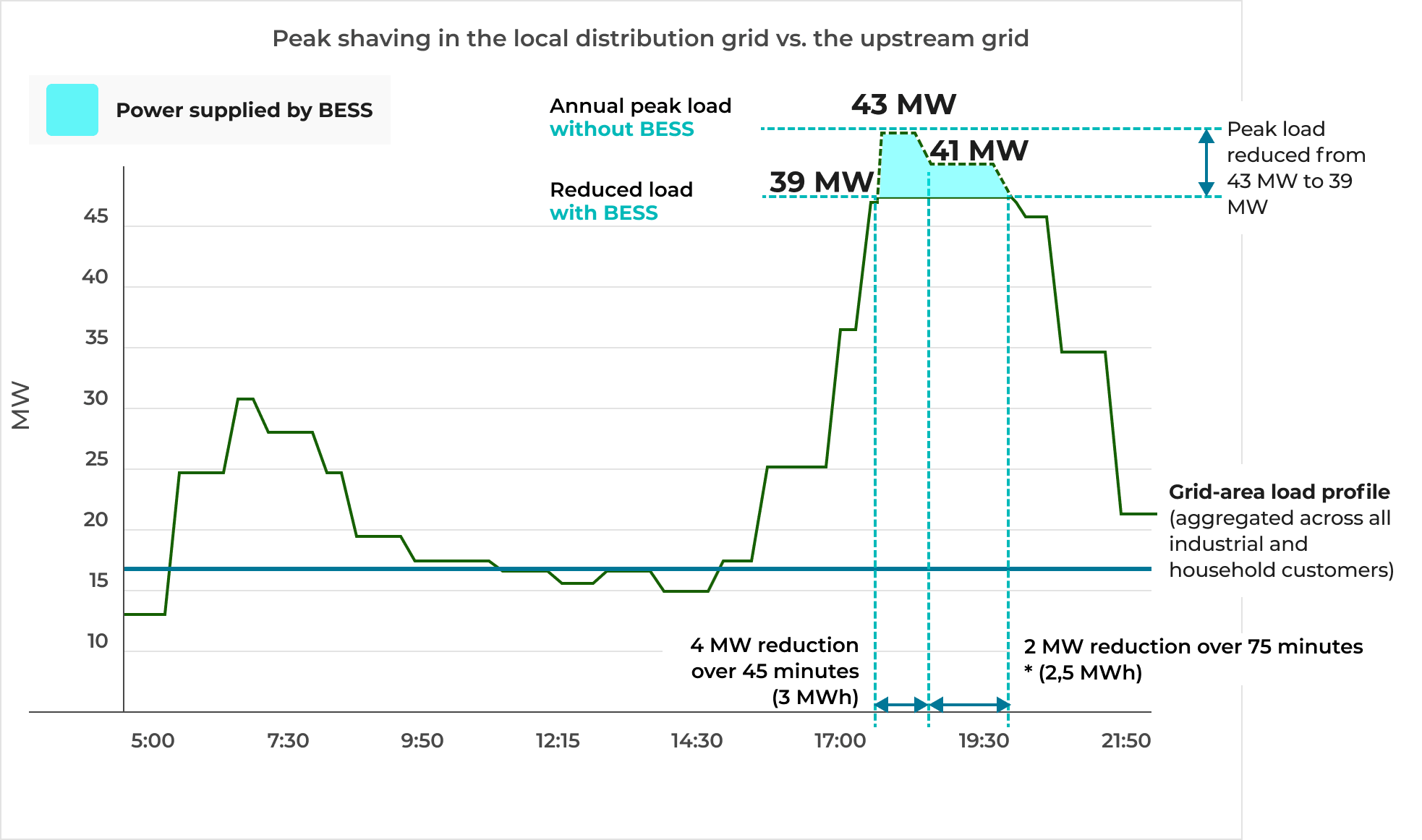
Distribution Grid Peak Shaving
BESS intercepts load peaks and ensures a reduction in grid charges
Example
- In a load profile, power increases from 6:00 PM for 45 minutes from 39 MW to 43 MW, then drops to 41 MW and falls below 39 MW again after another 75 minutes
- The upstream grid operator calculates the capacity price at €140/kW per year based on the highest quarter-hour
Without battery storage
- Highest peak load = 43 MW Capacity costs = 43,000 kW * €140/kW = €6.02 million p.a.
With battery storage (peak shaving)
- A BESS supplies power during peak load times (3 MWh + 2.5 MWh = 5.5 MWh) and reduces peak load from 43 MW to 39 MW
- New capacity costs = 39,000 kW * €140/kW = €5.46 million p.a.
Grid charge savings
- €560,000 per year
Battery Storage for Your Use Case – Start a Non-Binding Conversation
Are you a utility, energy provider, or grid operator looking for grid infrastructure that relieves you? Battery storage with flexible grid connection models according to § 17 para. 2b EnWG offers a future-proof alternative to conventional grid expansion.
We would be happy to analyze your grid and supply situation together and demonstrate how battery storage can be deployed in a technically and economically viable manner.
Take advantage of the opportunity for a non-binding exchange with our expert team.
We look forward to meeting you
Why do BESS make sense for utilities?
Utilities combine grid operation, energy supply, and generation. Battery storage acts as a central infrastructure asset that connects grid stabilization and economic viability.
This makes battery storage a high-yield investment for utilities and a strategic instrument to address increasing regulatory, technical, and economic requirements in the long term.
New Revenue Opportunity: System Services
In addition to spot and balancing energy markets is tapping into there are new opportunities battery storage further system services. Since 2026 can technical suitable Battery Storage – in particular with network-forming Power Converters – at the market-based Procurement by Instantaneous Reserve participate and so that to short-term Stabilization the Power frequency contribute.
Also Black Start Capability will be market-based and regional through the Transmission System Operator procured. Both Applications can additional Revenue Potential create, set however specific technical Requirements and suitable Locations in advance and should therefore as supplementary Revenue Streams considered will be.
Does FBS participate in competitive bidding processes?
Yes. FBS identified suitable Railway Tenders and involved itself to relevant Procurement Process for Battery Storage Projects. In this context accompany we the entire Process – from the Exam the Requirements and the technical Interpretation about the Creation the necessary Documents until to Submission and other Project Implementation. So can a municipal utility, Network Operator and Energy provider also Bidding Templates targeted for the construction of Battery Storage Systems use.
Can a grid operator issue a request for proposals for flexibility provided by battery storage?
Yes. If one Network Operator Battery Storage useful for the network use would like to, is the direct In-House Operation frequently not that legally compliant Standard Model. Instead can one Energy Storage Services pursuant to Section 11a of the Energy Economy Act (EnWG) put out to bid and from one Market Participants provided will be. Requirement is in particular, that the technical and economic Necessity across from the Federal Network Agency proven will be can. For municipal utilities and Network Operator opened itself so that the Ability to, required Flexibility targeted to procure, without the memory mandatory himself operate to must.
How can intelligent, flexible solutions avoid local grid congestion caused by growing load peaks?
What are the advantages of battery storage for utilities?
Battery storage enables utilities to reduce grid congestion, lower grid charges, and market flexibility economically by connecting grid operation and energy supply in an integrated system.
Grid-supportive operating modes relieve local congestion, while grid-neutral storage portions can be used for revenue optimization. Integrated utilities particularly benefit from this dual function.
How will battery storage help reduce grid charges in the future?
Battery storage can reduce grid charges by reducing load and consumption peaks, thereby decreasing maximum capacity utilization from the upstream grid operator.
Targeted peak shaving in particular can significantly reduce grid charges without compromising supply security.
Currently, there is no specific regulatory framework for this.
What does a flexible grid connection according to § 17 para. 2b EnWG mean?
A flexible grid connection according to § 17 para. 2b EnWG allows the connection of battery storage even with limited grid capacity by temporarily limiting feed-in or withdrawal capacity statically or dynamically.
In addition, intelligent operating modes and contractually regulated restrictions are used that enable grid-neutral or grid-supportive operation. This allows battery storage to be integrated into existing grids without costly grid expansion.
Can battery storage be used for grid support and economic purposes simultaneously?
Battery storage can be used simultaneously for grid support and economic purposes by dividing it into grid-supportive and grid-neutral storage partitions and controlling them intelligently.
This allows grid requirements to be met while simultaneously generating revenue from flexibility marketing.